license

Creative Commons License
Where the stuff on this blog is something i created it is licensed under a Creative Commons Attribution-NonCommercial-NoDerivs 3.0 Unported License so there are no requirements to attribute - but if you want to mention me as the source that would be nice :¬)
Showing posts with label election. Show all posts

Tuesday, 11 June 2024

A brave civil servant telling it like it is - maybe something that more of our politicans could aspire to


Obviously the right will see the clip above as a woke anti brexit liberal elite blob attack on their tremendously successful delivery record since Brexit.

Whereas I see it as a remarkable brave civil servant telling it like it is. 

As a reminder to all politicians, that is what public service is about. Speaking truth to power.

Some of the politicians still seem to get that.  But some of them behave as though public service is pimarily a route to increasing their own wealth.

Speaking truth to power is what public service is about.  Even if it means you don't get that promotion, or that honour, or that seat in the Lords, or that Executive Director/Consultant post in the private sector. 

And the right and the left don't really want to talk about Brexit because - you know - its water under the bridge and so what. 

For the right - they don't want to admit their lack of delivering the "take back control" opportunities. 

For the left - they don't want to talk about Brexit because - with a 48% to 52% ish split on the Brexit vote, they can't get beyond their fear of the electoral maths to be able to say the whole Brexit thing was a con. 

And on immigration neither the left or the right seem able to engage in a sensible debate.
.  
Some politicians tell us to fear immigrants as the cause for most of our unhappiness.

Yet the stranger, the immigant, has always being part of what made our economy and democracy and country strong - for centuries and centuries. 

Given that we have an ageing population, the sensible debate on immigration is - given our care services and other resourcing needs -  how much immigration do we need to fill the gaps - and can our communities live with the consequencies of that level of immigration?

Neither do any of the parties want to talk about the reality that - if you choose to not believe in ridiculous UK economy growth forecasts, or the same moronic forecasts on how we'll get the tax dodgers - then the reality is we're all in for a for a bit of a financial shock when the election is over.

On the no more taxes front - to get you ready for the fiscal reality that will eventually play out after the election  ...

- either we can't afford to have everything we want - so according to our individual economic wealth we'll be able to ride that storm out (look at the increasingly no. of people who can afford it, having operations in the private health sector) OR for the 1 in 6 of us who have effectively no or little savings - we'll be stuffed ...

- and/or somebody will have to get taxed more (according to the right and the left thats not income tax, national insurance or pensioners paying tax) so that leaves only a few options (apart from not increasing tax thresholds so inflation moves more and more of us ionto higher tax brackets)

- I've concluded that the current 2024 election topics of debate between the parties appear to be pitched at such a basic pureile level that the only thing they indicate is how low the talent level in our politicians has sunk, or how low their ambition to have an honest and thoughtful public debate has fallen.


Tuesday, 28 May 2024

Some Fullfact.org fact checkng of politicians claims since a UK general election was announced

I've taken Fullfact.org ‘s corrections to factually incorrect or partial statements from UK political parties, and amended the original text in the claims by politicians so the text corrects/clarifies what was claimed.


Photo by Elena Mozhvilo on Unsplash


Labour Party

On 23/5/24, claimed “seven and a half million cases people are on waiting lists, about some 6.3 million people”

On 27/5/24 Sir Keir Starmer’s made his first major campaign speech  The claims he made are in black font, the strikethrough and red font corrects/clarifies his claims

On the governments approach to Rwanda he claimed “it’s cost £600 million, (Includes some future costs)” and that the “Prime Minister has spent forecast spend is £600 million”. But part of this figure appears to refer to future costs, rather than the amount that has already been spent.

That the “chaos” under the Conservatives was “hitting every working family to the tune of £5,000, compared to a hypothetical scenario”.

Repeated a claim “that the UK army is the smallest it has been since the Napoleonic Wars size is comparable to the period shortly after the Napoleonic wars. “

Claimed that taxes are "were higher in 2022/23 than at any time over the last 70 years since the war".


Conservative Party

23/5/24, during an interview Prime Minister Rishi Sunak claimed the text in black font, the red font corrects/clarifies his claims.

 “the economy is growing faster than almost any other major country including the United States if you look at the latest quarterly GDP growth for G7 countries, but the UK has seen comparatively slower growth since the pandemic than most other G7 countries, including the US.”.

On LBC on 24/5/24 energy secretary Claire Coutinho claimed that “Labour did not complete build any [nuclear power stations] in their time in government and neither have any been finished since the Conservatives came into office in 2010”.

In a 24/5/24 post on X Rishi Sunak claimed: “Since I became Prime Minister, net migration has fallen by 10%, but it is four times higher than in 2019, when our manifesto said we’d bring’ ‘overall numbers’ down.”

In a 26/5/24 TV interview, Home secretary James Cleverly was asked about figures showing a 7% increase in knife crime. In response, he claimed the text in black font.“If you took Labour-run London out of the equation, that figure would be down up for year ending December 2023 in England & Wales.” The strikethrough and red font correct/clarify his claim.

27/5/24 online election adverts claimed the text in black font, the red font clarifies the claim  “small boat crossings are coming down” and “small boats [are] down 36% (comparing 2023 to 2022) but as at 26/5/24 are up 38% compared to the same period last year”.

On 28/5/24, during TV and radio interviews, Secretary of State for Work and Pensions Mel Stride repeated the following claim in black font, that the government having reduced National Insurance contributions by one third, “is worth a tax cut of £900 to an average earner, but once all tax changes since 2021 are factored in, the saving is some £340 in 2024/25.  Below average earners will actually be worse off.”  (the red font corrects/clarifies his claim)

Wednesday, 7 February 2024

Engaging Young Voters in the UK: Three Powerful Marketing Messages


Introduction: In the United Kingdom, encouraging young people to exercise their right to vote is not only essential for a vibrant democracy but also a way to ensure their voices are heard on issues that matter most to them. However, mobilizing the younger demographic to participate in the electoral process can be a challenging task. To capture their attention and inspire them to vote, marketers and campaigners need to craft compelling messages that resonate with the concerns and aspirations of the younger generation. Here are three marketing messages most likely to convince more young people in the UK to vote:

Photo by Eliott Reyna on Unsplash

"Your Vote, Your Future": The first key message aims to remind young voters that their ballots hold the power to shape their own future. By framing voting as a direct influence on their personal lives, this message connects the act of voting with tangible consequences. Young people often feel disengaged from politics, thinking that their individual votes won't make a difference. To counter this notion, marketing campaigns should emphasize that every vote counts and collectively, they can make a substantial impact on issues such as education, climate change, housing, and more. This message fosters a sense of responsibility and ownership over their destinies.

"Speak Up for What Matters to You":- Many young people are passionate about specific issues like climate change, social justice, and education. Campaigners can harness this passion by encouraging young voters to think about the issues that matter most to them personally. The message "Speak Up for What Matters to You" promotes the idea that voting is not just an obligation but a means to advocate for change. By aligning voting with their values and concerns, young people are more likely to feel motivated to cast their ballots and ensure their voices are heard on these crucial topics.

"Shape the Future You Want to See": - This message appeals to the idealism and optimism of the younger generation. It encourages them to view voting as a way to actively participate in shaping a better future for themselves and their country. The UK is undergoing rapid societal and environmental changes, and young voters have a unique opportunity to influence the direction of these changes. "Shape the Future You Want to See" urges them to be active architects of their society, helping to create the world they envision by participating in the democratic process.

Conclusion: To increase youth voter turnout in the UK, it's essential to craft marketing messages that speak directly to the concerns and desires of younger people. Messages like "Your Vote, Your Future," "Speak Up for What Matters to You," and "Shape the Future You Want to See" can inspire and motivate young voters to participate in the democratic process, reinforcing the idea that their voices truly matter and can make a difference in the direction of the nation. By aligning the act of voting with personal empowerment and societal change, campaigns can create a compelling narrative that resonates with the younger demographic, ultimately encouraging them to be more engaged and active in the electoral process.


Source:   I asked Chat GPT3.5 to "write a short article about the three marketing messages most likely to convince more younger people in the uk to vote" and the text and post title above was what it produced.  I then made some minor formatting changes and added the picture.

Thursday, 9 March 2023

The Conservative Party's "blame it on" culture war strategy for the next election

In politics the playbook of blaming others for what is wrong with our country is as old as the hills.  Sadly it still appears to work.  The tactic basically goes like this: 

1) remind people of an imaginery ast when all was rosy; 

2) pick out a group of people and/or some institutions to blame for why things aren't good now; 

3) suggest we should be afraid of the menace from these people/institutions; 

4) say you'll be tough on them to counter their menace to our way of life.  

This morning an interviewee on a radio programme illustrated how this playbook will probably be used in the next UK General Election.


The BBC's Radio 4 Today news programme this morning had a slot on twitter comments by Gary Lineker, (former footballer, popular UK sport TV presenter), comparing UK Government ministers language on migrants with the language used in the 1930's in Germany.

Given Gary's position as a prominent star presenter at the BBC, the Today programme asked Richard Eyre, a former BBC Controler of Editorial Policy, and former BBC Trustee, for his view on whether Gary should have tweeted what he did.

In giving his view Richard highlighted in a startingly clear manner the probable culture war strategy the Conservative party has for the next general election.  Here is what he said

" You can almost sense ... the start of a Government strategy - re-energise disallusioned Brexit voters, blame continuing immigration on lawyers like Kier Starmer (leader of the Labour Party opposition in the UK), blame it on the Supreme Court, blame it on, better still, the European Court of Human Rights, blame it on the Refugee Convention, blame it on woke media, blame it on woke metropolitan elites".  

So at least now, if you heed his insight, you'll recognise this specific blame playbook when its rolled out


Friday, 21 October 2022

If Boris can afford to be PM again, then don't doubt the Conservatives will vote for that

So what a success Liz Truss was as a PM.   Not.  Our "I'm not a quitter" impoverished Leeds Roundhay school educated ex-leader appears to have, well there's no easy way of sugar coating this, quit.

Of course, some are painting this recent unfortunate history as being something about her or Kwasi Kwarteng's failings.   The Conservatives call to their own and to us is: to pull together; put the country first; choose somebody competent to be the next PM.  Some reports in the media are that, if more than one candidate gets more than 100 MPs support, then Conservative party members might be involved again in picking our PM.

Meanwhile the blessed Boris's name is being mentioned again.  What doesn't seem to have occured to his backers is that, given his anticipated speaking and journalist fees, Boris can't afford to be PM again.  So just like that expensive wallpaper issue, maybe some rich Tory backer needs to come forward to top up a Boris PM's salary.


Against all of this spin and miss-direction, lets get a couple of things straight.

1) The Conservative party is putting its own, not the country's future first.

2) Conservative members voted Liz Truss in, so their credentials as talent spotters are zero.

3) Conservative MPs supported Boris way after it was clear he had broken the law and did not understand the concept of truth.  So their ability to speak truth to power seems limited.

4) The following miss-named Think Tanks all thought the mini-budget was a great idea - Institute of Economic Affairs, Taxpayers Alliance, Adam Smith Institute and Centre for Policy Studies.  Lets hope when the media invites their input in future the first question is always, "So why did you welcome Liz Truss's mini -budget?"

What we need now, we are told, is a serious, competent conservative leader to lead us forward with a validated economic plan for more glorious years of conservative rule.

Indeed, some are calling for an election now, which of course won't happen.  And opponents of the conservatives may well wish for two more years of chaos, so the opinion polls can go negative on support for the Conservatives.

Which leaves us with the uncomfortable reality of what its like for the rest of us.  Food prices are up, energy prices are up, borrowing costs are up, housing costs are up, waiting lists for healthcare are up, vacancies in health care, social care, crop picking and hospitality sectors are all up.  And thats not rhetoric from the anti-growth coalition, its the quaint and apparently unwelcomed facts and truth.

After 12 years the conservatives have run out of credible costed ideas to make a difference, they have run out of credible experienced individuals to form a government, and. according to opinion polls, they have run out of the public's support for their approach to governing.  

Their Humpty Dumpty self absorbed, self serving, self honouring, self privileging, self profiting  approach to politics has fallen off the wall and can't be put back together again, however many king's horses and men they dedicate to that task.  The Kings comment on all of this .. "Dear oh dear, anyway .... "


Friday, 24 May 2019

8min @theeconomist clip - Why #India ’s #election has stoked conflict


Text from youtube "India’s prime minister, Narendra Modi, has galvanised voters with an appeal to Hindu nationalism. But rising Hindu-Muslim violence is putting India’s historic secularism at risk.

India, the world’s biggest democracy. 29 states, seven territories, 900m voters and one age-old fault line – nationalism.

It’s pitting Hindus against Muslims and other minorities, and putting India’s long tradition of secularism under threat. Anamika is one of the 1bn Hindus living in India. She’s 23 and studying for a degree in physics. Today she’s leading a rally to get students to vote in the country’s upcoming general election. But Anamika doesn’t want these students to vote for just anyone. She’s actually the modern face of a vast Hindu nationalist group.

Anamika lives in Uttar Pradesh. It’s one of the most socially divided and religiously diverse states in India. Alam is one of the 190m Muslims living in India. A father of three, his family have been butchers in Uttar Pradesh for generations. Hindu-Muslim tensions are on the rise in 2019. But they’re by no means new.

These tensions run deep into the country’s history. In 1947, with India preparing for independence from British rule, the country was hastily partitioned into two separate nations. The creation of Pakistan was a response to Muslim nationalists anxious about living under a Hindu majority. Millions were killed or displaced as people fled to the new Muslim state or to India which portrayed itself as a secular alternative.

Today that secular alternative is under pressure. Not least in a conflict embodied by the Hindu faith’s most sacred animal. Over the past few years India’s Hindu-led government has pressed for strict enforcement of laws against anyone slaughtering cows or selling beef. The more hardline approach has hit Muslim and minority communities hard. Businesses that deal with any kind of beef have been shut down. They’ve been accused of flouting the law and some have faced even worse consequences. Across the country cow vigilante gangs killed 44 people, 38 of them Muslim, between 2015 and 2018.

Last year India saw a rise in hate-crime attacks against minorities. It was the largest number of incidents in a decade.

Then early in 2019, another historic flashpoint stoked tensions further. In February a Pakistan terror group claimed it launched an attack in the Indian-controlled part of Kashmir, killing 40 soldiers. India responded by bombing what it said was a terrorist training camp in Pakistan.

It had a profound effect across India. Prime Minister, Narendra Modi and his party the BJP have nurtured the sense of threat to Hindu security and culture. Ahead of the national election, Modi was trying to galvanise Hindus who make up 80% of India’s population.

Anamika and the Hindutva nationalist movement that provides Modi’s powerbase are taking that message out. In Uttar Pradesh, Alam’s now trying to run a fruit-juice business where his butcher shop once stood. But he’s struggling to pay the bills. He’s recently had to take his sisters and children out of school.

Modi first came to power as a moderniser with the promise of jobs and prosperity for India. But as the economy slowed, unemployment began to rise, so too did his support for the nationalist agenda.

Where he leads India next, to further division or back towards the country’s historic secularism, remains to be seen.

Wednesday, 28 February 2018

3min #GoogleNewsLab clip - A Look at #CrossCheck France - verifying media content in the run up to the #French #election


Text from youtube "A look at CrossCheck France, a collaborative reporting initiative that brought together newsrooms across Europe to verify social media content in the run up to the French election. "

Wednesday, 3 May 2017

1min 44sec #FullFact clip - Factchecking the UK General #Election 2017


Full Fact is the UK’s independent, non-partisan, factchecking charity and with your help they're going to factcheck the General Election 2017. 

So if you're fed up of spin and just want to be told the facts, so you can decide for yourself who to vote for, then please support them and their crowdfunder and help them factcheck the UK General Election. 

They don’t care how you vote. 

But they do care that you get the facts. Please pledge what you can, now.

http://crowdfunder.co.uk/full-fact

Friday, 8 May 2015

10 thoughts on some possible insights (& questions) from the UK Election results #GE2015


updates made this lunchtime are in red

1) The Conservatives will form the next Government 

- so should we just ignore pre-exit polls in future?(seeing as they got it so wrong)

- and is this an indication of a shift to the right in the English electorate?

Lunchtime Update - Conservatives have reached the magic 326 absolute majority number - and seem to have done so by winning seats off the Lib/Dems


2) SNP have won Scotland, Labour Wales & DUP Northern Ireland 

- so what future for a United Kingdom?

- do we need a debate on federalism?

-  will "English votes for English legislation" amplify the nationalism issue?

- will increased turnout  be revealed as a big factor in SNP's success?

Lunchtime Update - is this a rise in nationalism and if so will the Tories seek to encourage a rise in English nationalism (as some are saying the "anti SNP" message worked well for the Conservatives)


3) The Conservatives are using "one nation", "national interest" & "keeping the country together" language within their immediate reaction to the results

- yet plainly with the SNP results the "Scottish Question" will be a dominating political factor going forward

Lunchtime Update - and it maybe that the only hope for a UK future is a federalist approach - going beyond the "Smith" proposals (the "Smith" proposals are the language the Conservatives are using)


4) Next May's Scottish Parliament elections are key to the Scottish independence question

- next May's voting isn't 1st past the post - so some think they won't deliver a SNP landslide

- next May's voting will show whether Scots are happy with the extra devolution they have/will have

- if the SNP does win strongly then the issue of another independence referendum raises its head

- and that then may well bias Westminster decisions on investment in Scotland to be political (vs economic) and so this may bring into play a decision about whether to keep the nuclear sub fleet in Scotland


5) The "by 2017" EC referendum promised will be another factor dominating politics forward

- plus the Conservatives won't have the Lib/Dems to threaten their right wing MPs when they threaten revolt

- but maybe Cameron will have an arrangement with the DUP to use as a stick with his right wing

- at least the right wing Tories will behave until the EC referendum

- if the vote is to exit that will just strengthen calls from the SNP for another Scottish independence referendum


6) It looks like Farage (UKIP), Milliband (Labour) & Clegg (Lib/Dems) will go as leaders

Lunchtime Update - Milliband is stepping down (as is Harriet Harman), Clegg will quit, Farage has quit (but may put himself forward for the next leadership competition) - is 3 party leaders quitting within 2 hours some sort of record?


7) Labour faces difficult questions as to what direction it takes in the future

- will going left work in England?

- or should they go for the middle (and so say goodbye forever to Scotland)

- how do they escape the Tories message that Labour "wrecked the economy"

Lunchtime Update - given Labour representation is now down to levels similar to their 1987 General Election results should they return to the New Labour approach?


8) If people don't think your leader is PM material AND your don't think your party is economically competent then your chances of winning aren't good

Lunchtime Update - labour commentators are now describing Milliband as a "good & decent man" and in terms of the future of the Party are talking about "policy not personality"


9) Which messages worked and which didn't (within England)

- It looks like the Conservative "its the economy stupid" message worked

- and that the Labour "austerity" and "NHS threatened" message didn't (or was overwhelmed by others)

Lunchtime Update - the Conservatives "beware the SNP"  message success is being cited by Labour commentators as one of the reasons for their failure


10) The claim that local popularity of Lib/Dem MPs will save their skins has proven a myth

Lunchtime Update - and the significant Lib/Dem losses mean smaller parties will probably in future be very wary of going into coalition with a larger party 

Thursday, 30 April 2015

Beyond Election Day: #Power, Money, Government & Responsibility - How do we get #politics & business working for the common good? #GE2015Beyond

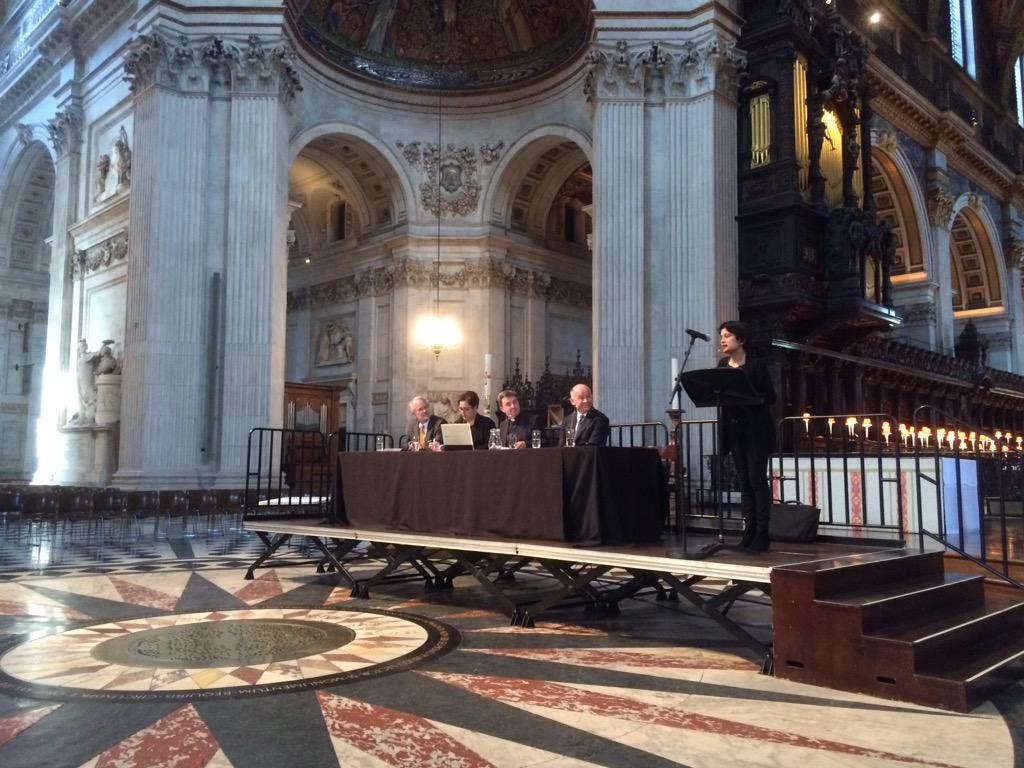
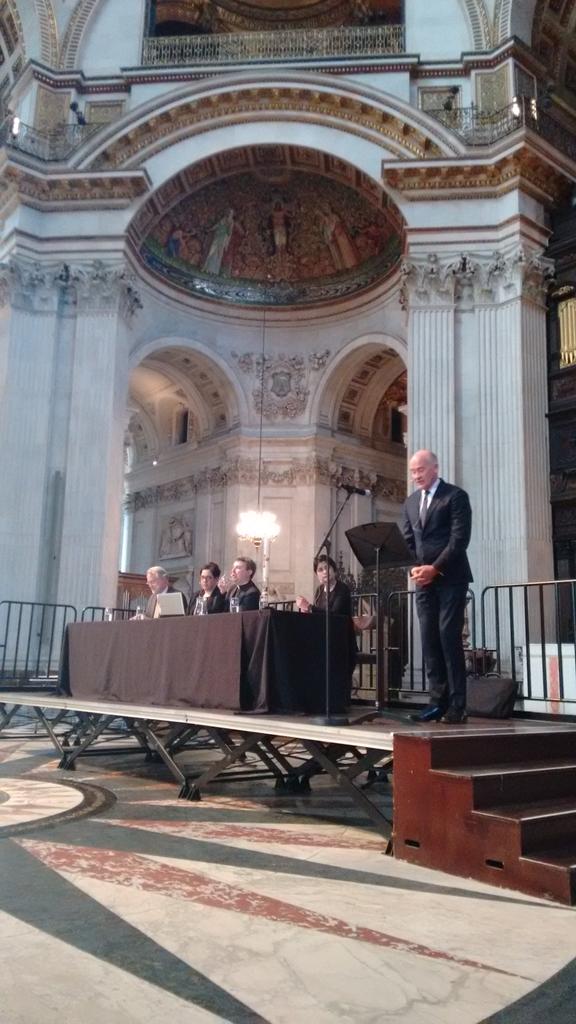
I attended this event yesterday evening.  

It was organised by St Paul's Institute in partnership with Theos and Together for the Common Good.  

A summary of the subject, chair and speakers is in the pic to the left of this text, (the 1st page of the event's handout).

The format was some opening remarks by each speaker followed by a Q&A & then some closing remarks from each speaker.  There is a video of the event below. 

At the foot of this post are links to other posts of interest AND pics of the other pages of the handout giving a bit more detail on the chair, the speakers and the organisers of the event.

My summary of the main points I heard being made - using others tweets where available - is below the video.


If I was mega summarising what each speaker said in a couple of lines it would be:

Shami Chakrabarti - Her 3 word summary of everything she believes about human rights is dignity, equality and fairness, and the greatest of these is equality

Conor Kehoe - maximising long term shareholder is still a good guide for directors to guide what corporations do in the interests of society but assuming long term value is measured by share prices maybe leading people astray.

Loretta Minghella - Any answer to how we address the common good must be able to address the biggest enemies of that common good - climate change, international tax dodging & gender inequality for women. 

Craig Calhoun - We no longer believe politics can be about higher purposes - that we can be more than creatures of self interest. We need a shared purpose and solidarity - common purposes - as part of our society, our country.  Politics when working well can help here

and in a bit more detail ....


Shami Chakrabarti's main points were:

She believes in fundemental human rights & freedoms - not just as a system of law but as ethical values that bind together the whole human family

Her 3 word summary of everything she believes about human rights is ....

Dignity = belief that every single human life is precious - just because they are alive (so not for what they've contributed or their nationality of sexuality or their "goodness" for example)

Equality = equal treatment under the law

Fairness = procedural - a fair hearing, presumption of innocence, access to justice

and the greatest of these is Equality because everybody loves human rights - their own & those like them.  We wouldn't have many of the problems we have if we treated others as we would wish to be treated ourselves.

During a General Election we need to remember that ....


Chakrabarti: democracy must continue in between elections. Much more than casting a vote every 5 yrs

and if we don't then those elected can take our freedoms away (as has happened in other parts of the world during our lifetimes).  Democracy is about fundamental rights and freedoms and the rule of law and these principles keep democracy alive and without them democracy would eat itself.

Some say rights are selfish and they don't build mutuality or responsibility.  Well ....

Do rights allow responsibility? Shami Chakrabarti says a bill of rights is by reciprocity a bill of responsibilities too

Closing remarks on what individuals can do

- democracy not just a 5 year thing

- live your values in your shopping basket and your home


Conor Kehoe's main points were:

2 big ideas drive how corporations are run today 
The headline from Conor's introductory remarks is that maximising long term shareholder is still a good guide for directors to guide what corporations do in the interests of society.  Citizens need to spend £'s on social (as vs for profit) programmes thru the ballot box or their own £'s. But assuming long term value is measured by share prices maybe leading people astray.

The Background to this headline
Shareholder Value - background
A corporation is like a person can enter into contracts - people can invest in and liability is limited to that investment, after all others are paid what is left is profit for investors.  But corporations are a fiction - an imaginary personas an 18th century jurist said "Corporations have neither body's to be punished nor souls to be condemned - they therefore do what they like"

Directors - appointed by shareholders - are responsible for a corporations behaviour.  Shareholders are in the main other large corporations - e.g. pension funds.  So to direct a corporation Directors need to: a) know what is going on; b) ensure their charges adhere to the law and norms of society.

Society allows corporations to exist so how can we ensure corporations act in the best interest of society?  Adam Smith's answer was the "invisible hand" (an owner operating in their own interest to gain more profit in a competitive market).  But that is talking about real people - not the imaginary people that are corporations. 

Friedman & Jenson in 70's & 80's proposed directors should run corporations to maximise shareholder value - today's profits and those out into the future.  As shareholders are the last to be paid after all others therefore maximising their value maximises value for society (competition & search for profit are the regulators much as in Adam Smith's day)

Market Efficiency - background
Share price efficiently puts a value on all those future profit streams that will accrue to shareholders.  But problem is that there is some evidence that the market is short termist.  Even if you don't buy that there is plenty of evidence that CEOs and directors believe the stock market is short termist & so behave accordingly.

Closing remarks on what individuals can do

- get engaged as a consumer and employee and as a member of a pension fund


- use the power of social media

- encourage layers to take a broader view of stakeholder value


Loretta Minghella's main points were:

Climate change is making extreme weather events that kill people or make them homeless more likely - so what are we doing about climate change?

Any answer to how we address the common good must be able to address the biggest enemies of that common good - climate change, international tax dodging & gender inequality for women (Christian Aid's big 3 causes of poverty)

"To promote the common good we must dismantle the environment where poverty can exist"

Christian Aid starts from the position that each person is made in the image of God and so is of inherent dignity and infinite worth.  

Poverty is incompatible with the common good so need to put in place building blocks so personal, social, political and economic power are truly shared and a world n which true charity flourishes

Individual charity = sympathy & giving for anothers plight & is really needed but only creates a temporary sense of connection. Less charitable is the small donation to escape a person asking for charity or some business' CSR programmes so NGOs don't disrupt the AGM.  

True charity = transformational.  Building relationships of integrity which pivot on the idea that we are all equal and all deserve a place at the table.  In a christian sense a full hearted and demanding love, a relentless commitment to what is good for the other manifested in right and just and loving relationships.

To achieve this business and politicians and civil society need to work together.  Of course in all of this we have personal responsibilities (e.g for what we buy from where) but we also need to hold government and businesses to account. 

Examples of such an approach? Dismantling of apartheid or US civil rights movement. Dropping of poor country debt.  These e.gs bear witness to the power of people of like mind coming together in a common cause.  And also, to some extent, to the power of vulnerability - how awesome it is when people put themselves on the line for the freedom of others. 

Business & government find vulnerability difficult to show and change difficult & often get stuck in defensive postures.  Often civil actors can give them the cover to be vulnerable.

Closing remarks on what individuals can do

- we have choices we have to make about the type of world we want to live in - as citizens of the world.  As part of that comes responsibility about connecting and speaking out and taking risks of failure and vulnerability


Craig Calhoun's main points were:

We no longer believe politics can be about higher purposes - that we can be more than creatures of self interest

Politics should be about education and choice: a deeper kind of politics.

Public life should be about - individually and collectively  - an awareness of how we need to grow in awareness and understanding

We need a shared purpose and solidarity - common purposes - as part of our society, our country - politics when working well can help here

We shouldn't accept the premise that the market is a perfectly self regulating system. That is a device by which we analyse it.  Its a partial truth. Markets are interwoven in all of our lives

Government isn't just those in Westminster, through politics it should be something we are all part of.

Politics should enable conditions for engagement.


LSE Director: Social responsibility not just what you do with the money you make but how you make it

Shareholder value shouldn't blind us to all other stakeholders in a business

We should look at market failures - production of bad stuff in production of wealth.

Love isn't just equality it is also connectionClosing remarks on what individuals can do

- gave an e.g. of a single student coming to him and saying LSE should be paying minimum wage

- our society is structured around getting not giving so giving can be sacrificial  - but worth it to embrace a different concept of the good


Soundbites from the Q&A

Shami 

- what links all 4 speaker's contributions is internationalism - this is a shrinking interconnected planet

- the level of information gathering now going on via big data is ripe for abuse

- identity cards invariably become a mechanism for racial discrimination

- voting - a right paid for in courage and blood

Chakrabarti says women have had the vote for less than 100 yrs, so if you can't decide who to vote for vote for a woman (!)

- christian role - more attention to poverty and less to sexuality


Conor 

- big companies are very powerful so we need to hold them accountable


Loretta

- legislation designed to affect danger of business impacting politics seems to have instead focused on charities "sticking to their knitting"

- much more transparency needed on where businesses are making their profits where and how and how and what tax they are paying where and how and how they are using their money to create purchase on the political landscape.  Longer term businesses are at risk from each others excesses (where governments aren't equal to the task)

- if you do not make a contribution to the debate then your voice is missing and nobody else can replace that

- corporations are global but regulation of them isn't - and in short term we won't see global regulation and why transparency is so important

- christianity can speak truth to power


Craig

- often we let our discourse be dominated by how we can prevent the bad rather than what we can do accomplish for the good together

- there are always alternatives to current arrangements - and these alternatives change themselves

- firms should see employees as stakeholders in the firms

- doing business and forming a corporation is a gift from the state 

- political campaigning needs to be reformed to avoid undue influence on politicians of those with money

- land is a big issue for our national output


Q:what does relig bring? says he's a Christian and Christianity offers a willingness to speak about values


- and how to talk about values


other posts on RSA, TED, other lectures, conferences, others blog posts
18 top tips and thoughts about using #social media to enable #community source = an article by  Anatoliy Gruzd PhD & Caroline Haythornthwaite PhD 

2014
Data Protection & Privacy - 8 issues from an International Conference
escape your social horizon limit & understand more - source = a blog post summarising the work of  Jeffrey A. Smith, Miller McPherson & Lynn Smith-Lovin
social media & death - 10 things you may not have thought about - #DORS conference

2013
the development of the U2 spyplane - source = CIA historians Gregory Pedlow & Donald Welzenbach
considering culture and business process improvement  - source = an article by Schmiedel, Theresa, vom Brocke, Jan, & Recker 
ideas that may help you attract older volunteers - source = a paper by Brayley, Nadine, Obst, Patricia L., White, Katherine M., Lewis, Ioni M.,Warburton, Jeni, & Spencer, Nancy
physical factors which help people get better quicker - source = a paper by Salonen, Heidi & Morawska, Lidia 
a new approach to school and education - by Geetha Narayanan 
guiding principles on designing construction kits - by Mitchel Resnick & Brian Silverman
signs of overparenting - source = an article by Locke, Judith, Campbell, Marilyn A., & Kavanagh, David J
making ideas happen - source = a 99U conference

2012
how to spot a liar - by pamela myer 
measuring happiness - source = talk by jim clifton, jim harter, ben leedle


Other pages from the event's handout