south cambridgeshire (uk) based explorer - i post stuff i think is ok. sometimes i create summaries of others stuff. now & then I'll create content when inspired. it keeps me amused.
In recent years the number of FOI requests in the UK has gone up by some 20% each year whilst the % replied to within 20 days - which is the normal timescale FOI should be replied to - has gone down some 4% per annum.
In 2024 there were some 83k FOI requests and some 70% were replied to within 20 days.
Looking at the 2024 versus 2023 data in the detail, Departments of State experienced a 5% increase p.a. in FOI requests whilst Other monitored bodies faced a 32% increase p.a.
Comparing 2024 with 2023 replies within 20 days, Departments of State appeared to be hovering around 82% with a trend of a 1% decrease every 2 years, whilst Other monitored bodies replies within 20 days were going down some 6% p.a.
Taking this data and modelling it into the future, the upshot seems to suggest that somewhere around 2028 the number of FOI requests taking 20 days or longer will have crossed over to some 51%.
So it’s possible that by 2028 complaints to the Information Commissioner's Office (ICO) about the 20 day time limit not being adhered to will be increasing. Plus, the ICO will have a knotty problem across all public authorities that the required 20 day time limit on replies is no longer being normally adhered to.
Apparently when a breach of law is found the ICO can issue a Decision Notice explaining the law and what to do, or an Enforcement Notice requiring specific actions to put things right. Failure to comply with these notices can lead to court proceedings for contempt of court.
Text from youtube "The refugee crisis is one of the most pressing challenges for the world today: around 1 person in 100 is a refugee. David Miliband, a former British foreign secretary, offers his thoughts on how to solve it. "
Last Thursday I attended the #Polis2016 conference at LSE, London UK. This post is about some of the ideas that came out from a session on Reporting Refugees.
1) Victims or heroes - There was quite a lot of discussion about how sometimes the stories journalists present about refugees frame them as being helpless and needy victims. But a cursory reflection on the determination needed for a refugee to start and continue on their journey indicates the exact opposite.
After @jonsnowC4's intro the panel discuss how mental health issues are unrepresented in refugee reports #Polis2016
So I guess a lesson from these points is:
3) Do the public only want the simplified 3 minute summary?Some of the panels discussion was about how the roots of the refugee situation went back a fair way in time and were complicated. Similarly trying to simplify descriptions of what is happening now to fit "3 minute" slots for TV could present a cartoon like depiction of reality.
Interesting debates this morning at #Polis2016 about reporting the refugee crisis. See our special report on this:
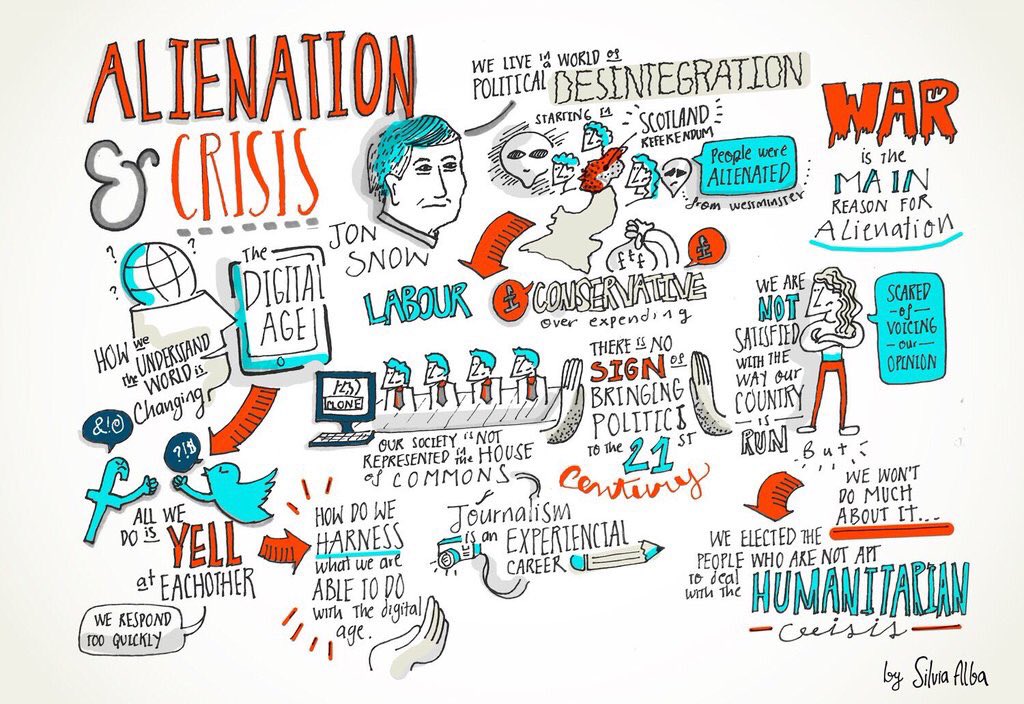
PS In an earlier post I summarised the key ideas and quotes from Jon Snow's opening address on whether journalists can win back the public's trust. Since then Charlie Becket has tweeted a graphic of what Jon talked about. Its a great summary - you may want to read my earlier post to understand some of the headlines in it.
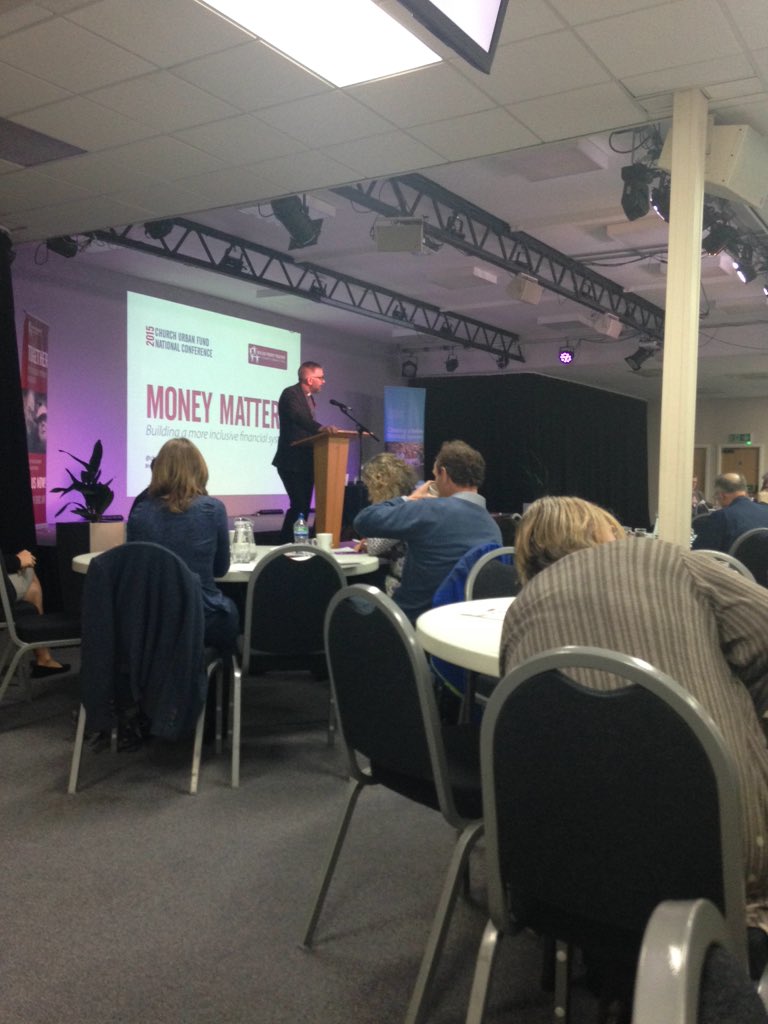
Last Thursday I wandered up to a rainy Manchester from an overcast Essex to attend this one day event. What follows is a post about the day using my notes and others tweets. My thanks to the church urban fund for putting on this most informative day and the tweeters whose tweets have helped me construct this post.
In summary the key insights, quotes, contacts and resources I gathered from the day are below 1) Factoids - I in 6 of those who need financial advice actually ask for it - "financial distress is the principal cause of personal distress - there are 8m over emdebted adults in the UK - the unsecured debt in the UK (excl. mortgages) is £6k per household - 21m in the UK don’t have £500 of savings - 65% of clients seeking financial advice visit their GP due to their financial distress - and 34% contemplate suicide - and 21% have broken relationships - the no. of jobs with limited hours remains high – underemployment is still an issue - Half of those in poverty in the UK are living in homes where at least one person is employed - 42% of households are finding it difficult to manage
- Some 600k are without bank accounts (has reduced)
- There has been a drop in the no. of saving accounts - But for those who do have savings the amounts in the accounts are increasing (a sign of increasing inequality)
- Unsecured credit – payday loans - have declined. But its difficult to say where people have gone instead
- More are now saving for Pensions – but are they saving enough?
3) Quotes "Poverty means you can't take part" "We now know, beyond all doubt, the impact of poverty on people's mental health" "Managing money well is a key part of living a fulfilled and contented life" "anyone in a living relationship with Jesus Christ is doing theology" "The true theologian is one who prays" "Aren’t we a church of the poorest – as well as a church for the poorest?" "Isn’t the church about helping the voiceless get a voice – rather than being their voice for them?" "If the world as it should be is not going to happen tomorrow - then where is it right for us to compromise now? "How do we 'handle' the material world? As iconic (of life of God) or idolatrous (distracting from love of God & neighbour)? 4) What caused the financial crisis?- in 8 points 1) Most financiers are optimists, 2) Most financiers are motivated by personal reward, 3) Some are willing to do wrong for personal reward, 4) The financial system itself is too complicated, 5) So often actions have unintended consequences, 6) Economic science is imperfect in its understanding of how things work, 7) Politicians and regulators are partisan in their views, 8) Materialism and greed are the prevailing values of society
5) Five Actions needed to address remaining financial crash issues 1) Criminal convictions for those miss-selling or manipulating markets,
2) Firms and regulators need to strengthen their oversight, enforcement and deterrence (specifically against those who wilfully take wrong actions), 3) Firm's actions need to be more clearly aligned to the common good and right outcomes as do their incentives,
4) Individuals financial capabilities need to be improved,
5) Competition and diversity in the financial market need to be improved – especially in the community finance sector
6) Five things the churches can do
1) Help & support the community financial sector, 2) appoint Church credit champions, 3) support the Lifesavers - weekly savings clubs, 4) Provide training & resources to integrate financial education into existing subjects in curriculum, 5) Use its influence, 6) Raise awareness of non bank lending institutions, e.g thechurches mutual credit union,
7) How HMG can help community finance grow 1) enable payroll deductions by credit unions, 2) provide mutual infrastructure, 3) support capital lending at not for profit rates, 4) Improve incentives & support for poor savers 5) Provide some leadership as suggested in the Financial Inclusion Commission report
8) There are 3 main causes of financial exclusion
1) Low and insecure income,
2) The policy & practice of banks, regulators utility providers and high cost finance providers - all of which mean the poor pay more for their banking and utilities than richer people,
3) Reducing benefits that are no longer a safety net If you have any materials or links to slides that I've missed please message me and I'll add them in. Today (10/11/15) I've added to this post videos, transcripts, slides and seminar info CUF have put on their site. At the foot of this post are links to some other summaries I've done that you may find useful. What follows below is a bit more on each of the sessions plus links to useful info or sites. My own observations and information are in red coloured font ......
Sir Hector Sants talking about how society and the Church have responded to the Financial Crisis #Moneymatters
1) Manage prudential risk better
- Generally there has been a good response with new capital and liquidity rules
- And rule changes that bad decisions will now impact more on
capital providers and employees
2) Deter senior executives from not managing risks well
- the approach has been had been strengthened and this plus the point above means the impact of bank failure on society has been reduced
- (my
notes on this aren’t clear as Sir Hector was talking at pace - but I assume he made this statement based on the points 1) & 2) and the assessment that taxpayers won't have to bail banks out in future - but as concerns the UK economy and finance's % share of it - aren’t the banks still too big to fail?)
Sir Hector Sants. Financial systems must be fair, accessible and serve common good #MoneyMatters @churchurbanfund @toyourcredit
- ethical
- provide responsible credit (so debt people can pay back, which is affordable, which is flexible to people's changing circumstances)
But the system is not as ethical as we would like so ....
How should the financial sector improve the financial system given the reality of human nature?
1) Firms (and especially their compliance functions) and
regulators need to strengthen their oversight, enforcement and deterrence
(specifically against those who wilfully take wrong actions)
2) Firm's actions need to be more clearly aligned to the
common good and right outcomes as do their incentives
3) Individuals financial capabilities need to be improved
4) Competition and diversity in the financial market need to
be improved – especially in the community finance sector
And what can the local churches do?
1) Help the community financial sector
- by encouraging people to use that sector to save and borrow money
Community finance sector needs to be strengthened as local and member owned. Church instrumental. @churchurbanfund #MoneyMatters
- Sir Hector pointed out that the CofE has an unmatched branch network with some 16000 churches. So churches can provide buildings and venues and other physical opportunities for credit unions to provide local services
31 dioceses and over two thousand @c_of_e parishes now involved with supporting #CreditUnions - Hector Sants #MoneyMatters @theologycentre
- by appointing Church credit champions – to support organisations like credit unions, aid access to quality debt advice (debt signposters), support the lifesavers project, provide general information, help people save ethically, support the use of church buildings to provide affordable credit
2) Help improve people's financial education
- Help manage multi generational financial education via primary schools (1 in 4 of primary schools are CofE
- so parents, staff, children and church members are all educated
'The church should be contributing with passion and commitment to a fairer and more ethical financial system' Hector Sants #moneymatters
- Sir Hector said that since 2013 and the CofE's campaign to provide alternatives to payday lenders there has been a 68% reduction in the payday loans sector
Conclusions
- Sir Hector mentioned that Direct service provision had been considered. But it had been decided that it was not appropriate for the CofE to operate financial services itself. Instead they needed to raise awareness of non bank lending institutions, e.g the churches mutualcredit union, influence others and help and add value to existing initiatives
- The key looking forward was how to continue the trajectory on Credit champions and Life Savers
- managing money well is a key part of living a fulfilled
and contented life
- One of Sir Hector's aims was that every CofE church be involved in the various initiatives to the degree it can be
Q&A
Q1) Educating those managing on less – isn’t this insulting to
those who simply don’t earn enough?
A1) Financial education itself doesn’t address poverty
itself. That is a different sort of problem. But encouraging people to make
small amounts of savings is really important in terms of helping people not go
into debt
Q2) 68% reduction in payday loans – where did they go instead?
A2) Note: Although other speakers pointed to a lack of reliable information on whether this reduction in payday loans just represents a transfer to other (and sometimes worse) forms of borrowing. As concerns payday loans and the Q&A at the end of this 1st Keynote address:
- a rep from the payday sector quoted some research with a small (2k?) sample that he said indicated some 2% had gone to worse(eg loan sharks)lenders
- Sir Hector said he didn't think they have gone to unregulated loan sharks and also mentioned that in terms of use of payday loans around 50% seemed to be for “understandable” reasons and 50% for “impulse” buys
Q3) What should the government do?
A3) Credit unions are 2-3% of the UK sector – in other countries
they can be 20-35%. HMG can help community finance get a larger % share by:
- enabling payroll deductions by credit unions
- providing mutual infrastructure
- supporting capital lending at not for profit rates
Q4) Don't credit unions compete with each other – and do they want
to work with churches?
A4) Yes not all credit unions want to work with churches. But churches can still help CU’s grow (and remember out of 300 or so CUs some 10 or
so fail p.a.)
Q5) As credit unions grow doesn’t their ability to offer local
services reduce?
A5) The local knowledge factor maybe to do with size – but most
CUs aren’t big enough for it to be a facto. So this is high class type of
problem to have and we don't have it yet
Q6) On the subject of managing finances well and the subject of
equity – isn’t it indulgent not to invest in Trident?
Not answered. (I’m not sure my summary of the questions is
correct as I found it difficult to understand the question being asked)
U.K economy is heavily dependent upon the financial services and academics debate around how we need to change that #MoneyMatters
So some academics say the UK is already too dependent on financial sector – that the economy is not balanced
Some facts and figures and analysis
Work
– in 2007/8 around 1m lost their jobs, by 2014 unemployment was down to pre-crash levels. But no. of jobs with limited hours remains high – underemployment is still an issue
Half of those in poverty in the UK are living in homes where at least one person is employed #MoneyMatters
- As measured against Minimum Income Standardspensioners more or less achieve MIS, other groups achieve 40-60% of MIS
(MIS asks members of the public what goods
and services they think different types of household need (needs not wants) to
live to an adequate level. The 2015 figures worked out at £17.1K income - before tax - for single people, and for a couple
with 2 children - £20k each
So just in case you think MIS might be too high - for a single person each week their MIS is made up of:
£86 Rent -
so around £12 a day
£45 Social
& cultural participation - so
around £6 a day
£44 Food –
so around £6 a day
£27 Other
Travel costs -
so around £4 a day
£17 Fuel -
so around £2.50 a day
£15 Council Tax - so
around £2 a day
£13 Personal
goods & services - so around
£2 a day
£12 Household
goods
£7 Clothing
£6 Water
rates
£5 Alcohol
£3 Household
services
£1 Household
insurances
£0 Motoring,
Childcare, tobacco
- Foodbank usage in 2014/15 (in 2010/11 it was 62k)
Getting a job is no guarantee of staying out of poverty. Over 1 million are using food banks.#MoneyMatters
Banking & Savings & Debt & Pensions & Benefits
“You need a letter from God to get a bank account round here”
- 42% of households are finding it difficult to manage
- Some 600k are without bank accounts (has reduced)
- There has been a drop in the no. of saving accounts – but for those who do have
savings the amounts in the accounts are increasing (a sign of increasing
inequality)
- Unsecured credit – payday loans - have declined. But its difficult to say where people have gone instead
- More are now saving for Pensions – but are they saving enough?
- Evictions from rented accommodation 42k (2014) – In 2009 this was 28K
In summary the 3 main causes of financial exclusion
1) Low and insecure income
2) The policy & practice of banks, regulators utility providers and high cost finance providers - all of which mean thepoor pay more for their banking and utilities than richer people do. e.g. 0% more for their fuel (pre-pay) and 50-150% more for their loans
3) Reducing benefits that are no longer a safety net
And all of this impacts badly on people’s physical and
mental health
What do we need to do to tackle these causes?
1) Have Living wages
2) Have social security which is a safety net (it isn’t at the
moment)
3) Reform banks, alternative finance providers, local
authorities, housing associations, money advice agencies – in how they give
advice, deal with debt & evictions, charge for loans & overdrafts &
credit cards
A2) See previous debate in Q&A for 1st keynote. Prof Karen pointed out that there is a role for payday borrowers – but really people
need to not borrow.
Q2) Have you heard of delays to assessments so HMG don’t have to
pay benefits?
A2) Delays on Employment Support Allowance are 6 months or more. Its outrageous how HMG seem to be able to get away with this
Q3) Why was Gateway was ditched but Help to Buy ISA continued?
A3) Savings policy & practice is biased towards helping the
wealthy more than the poorest
Q4) Local authority savings – what are they to do?
A4) They have my sympathy in the very difficult decisions they have
to make
Q5) What is happening as concerns people having access to the
internet to claim benefits?
A6) Internet access is required to access Universal Credit. HMG ought to make access possible via basic SMS capable
mobile phones
Q6) Long term unemployed on benefit – what will happen when all
benefit is given to a person who comes from generations of worklessness?
A6) Under Universal Credit one person in the household gets
all the benefit - one month in arrears. This will be a challenge to those who've previously had their rent and other costs paid for them rather than via their bank accounts.
Q7) Should people have access to credit?
A7) Credit Unions are actually also about savings – despite the
name
Q8) Benefits are down & tenants are quickly evicted if they
have no income – have you heard that local authorities are imposing rules on
access to social housing (e.g. you have to have been in the area for 10 years)?
A8) No I hadn’t heard that – it sounds almost like the poor
law/parish system from history.
Great to have @AngusCTC at the #MoneyMatters Conference reflecting theologically on issues of #financialexclusion
Angus explained he had been asked to Asked to talk about financial systems and about theology –
both are intimidating and have their own high priests who think they are right
Ken Leach used to ask
- What is theology and who gets to do it? - Well theology is political, spiritual and social
How do we speak, think, pray & act as a church *of* the poorest, not just *for* 'them'? @AngusCTC #moneymatters
- Shouldn’t we be about helping those at the sharp end of
injustice organise against it? – so power is transferred to them (by those who
usually don’t give up such power)
- Isn’t the church about helping the voiceless get a voice –
rather than being their voice for them? The Sacrament & the bible & grace & communion - “The sacraments aren’t freak events in a world that doesn’t
operate to their way – they reveal what our world is fundamentally about” - The bible is full of metaphors about debt, slavery, freedom - and those metaphors are at the heart of faith
- The gospel itself is full of tension in its message of
reconciliation
- Isn’t the blueprint for the material world for us to grow in
communion with God and our neighbours
- Indeed the material world itself is a gift given through
grace for such communion
- The scriptural prohibitions on usury – what do they mean? For credit and debt?
- How do we help people grow in communion?
- When we lend are we about building people up?
- If the world as it should be is not going to happen tomorrow - then where is it right for us to compromise now?
Icons & idols & the material world - Today an icon is something you click on so something else
opens
- If the material world can bear the glory of God incarnate
then aren’t icons windows into communion with the divine? - And as such icons are different from idols which try to attract our attention themselves
How do we 'handle' the material world? As iconic (of life of God) or idolatrous (distracting from love of God & neighbour)? #moneymatters
Reflection In the
Ignation tradition – do we reflect on how our daily exchanges have helped us grow in
our charity of interactions with others? - and ask where was God in those
encounters?
- In spiritual
direction are we ever asked what we do with our money?
How could the
world of theology and finance not interact?
- You also need
to really know and understand your church and your neighbourhood
- They started with a drop in - places of welcome – where hospitality was key and which had internet access to help people with job searches and other questions
- They wanted to go beyond the model of clients presenting issues to a service provider
- So they formed a team (about 6 people) of people who were good listeners and they wanted that team to get to know people better. The listeners took a Dictaphone with them and used a no. of tools (from this document) to help their listening:
1) A picture of your home – draw in who lives in it, who goes out from it to where, who comes into it from where
2) A timeline horizontally across a page in the pages middle – above the line = good times, below the line = bad times. Think thru the last 5 years or so – mark in good times and bad times – talk a bit about them
3) A picture of 2 jam jars – the left is income, the right is spending – write down what the major items are in each
4) Livelihood Ladders – Physical, Social, Human (they re titled to internal), Public (they retitled to local), Financial
They listened using these 4 tools – then got together as a team
and tried to summarise what they had heard. Then they shared a draft of that summary with those they had
listened to and finalised it with them
Then they shared the summary with local politicians, authorities and school Money Talk - A project looking at how faith affects what those of faith do with their £ - Used in small groups, sermon times, bible studies - Uses a structure of Listen - go out to people Reflect - on what the bible says about money and what the passages truly mean - "the poor will always be with you", - "the love of money is the root of all evil", - the parable of the talents, - the story of the rich man and his barns who dies, - the story of the rich young ruler "go and sell your possessions "and give to the poor
Dr Andrew Orton at Durham University Links provided by CUF on their site on 10/11/15 ....
Listen up! – The experience of Hodge Hill Church, Birmingham,
Money Talks – a guide for starting a conversation in your church.
Building financial capability:
Links provided by CUF on their site on 10/11/15 ....
The Basic Budgeting Course – an adaptable and accessible course developed by Transforming Notts Together. (Please email hello@cuf.org.uk for more information)
Great to hear about the work of @MurstonCommBank @churchurbanfund #MoneyMatters conference #partnership #makingadifference
- They are relatively new and were up and running in 90 days - Their areas issues are unemployment, debt, domestic violence, isolation - They have many partnerships - They help people fill out loans forms - in doing so often it becomes clear its best the donlt get a loan - They have citizens advice in church along with a cafe - They do children's savings and the most regular from the local Junior School got a certificate signed by the bishop and the diocese added £10 to their savings - Other activites include a toddler group, school uniform recycling, debt advice St Andrews Community Network
- They started working with toddlers and parents and have been going some time (10 years or so?) - The created a church owned company & charity and have gradually grown to provide debt advice, foodbank, credit union, financial education, mental health support - They got somebody to do a report on their impact in terms of a calculation of social return in £'s - They use the CMA debt model as it allows more to be served (in their opinion) - Whereas the CAP model is quite restrictive on no's served buy stronger on faith commitments - They invest heavily in their volunteers training and skills - Growth has brought with it challenges keeping relationships and quality of exposure to people to listen - They make a real effort to listen to their volunteers in terms of what is and isn't working Links provided by CUF on their site on 10/11/15 ....
Read all about my day at the @churchurbanfund conference yesterday here #MoneyMatters
other posts on RSA, TED, other lectures, conferences, others blog posts
2015
10 useful links (no. 16 - includes links to all the previous useful link post plus 10 new links on subjects like you tube live streaming, pep talk generator, pew research data, tolkein reading the #Hobbit, 21 #twitter tools, #financial inclusion & others